Help Your Teenager Appreciate What They Have without lectures, guilt trips, or arguments
The Gratitude Playbook gives you a short video training and ready-to-use conversation starters to help you teach gratitude differently, even if your teenager rolls their eyes every time you bring it up.
The more you remind your teenager to be grateful, the LESS grateful they seem.
You drive them everywhere. You make their favorite meals.
You pay for their activities, rearrange your schedule, and bend over backwards to give them a good life.
And sometimes?
Not even a "THANK YOU".
Or worse... they complain.
And you can't help but think:
"Do you have ANY idea how much I do for you?"
So you remind them. Point out everything they have. Maybe even mention how much other kids
would LOVE to have what they have.
But instead of appreciation, you get eye rolls, defensiveness, or silence.
Here's what you might not realize:
The more you try to convince your teenager to be grateful, the more they may feel like
they have to defend themselves.
And suddenly, a conversation about gratitude has turned into another argument.
What if your teenager isn't as ungrateful as you think?
What if you could help them recognize the good in their life WITHOUT constantly pointing it out for them?
You want your teenager to appreciate what they have. But you also want that appreciation to be GENUINE, not something they say just to get you off their back.
Imagine being able to:
Bring up gratitude without your teenager immediately rolling their eyes or shutting down.
Know what to say when they complain about something you've done for them.
Stop feeling so personally hurt when they forget to say thank you.
Plant seeds of gratitude that can grow long after the conversation ends.
Have conversations that help them recognize the people, opportunities, and everyday blessings they might be overlooking.
Because you don't just want a teenager who says "thank you" because you told them to.
You want a teenager who actually FEELS grateful, right?
Raising a grateful teenager starts with changing the conversation, NOT demanding a thank-you.
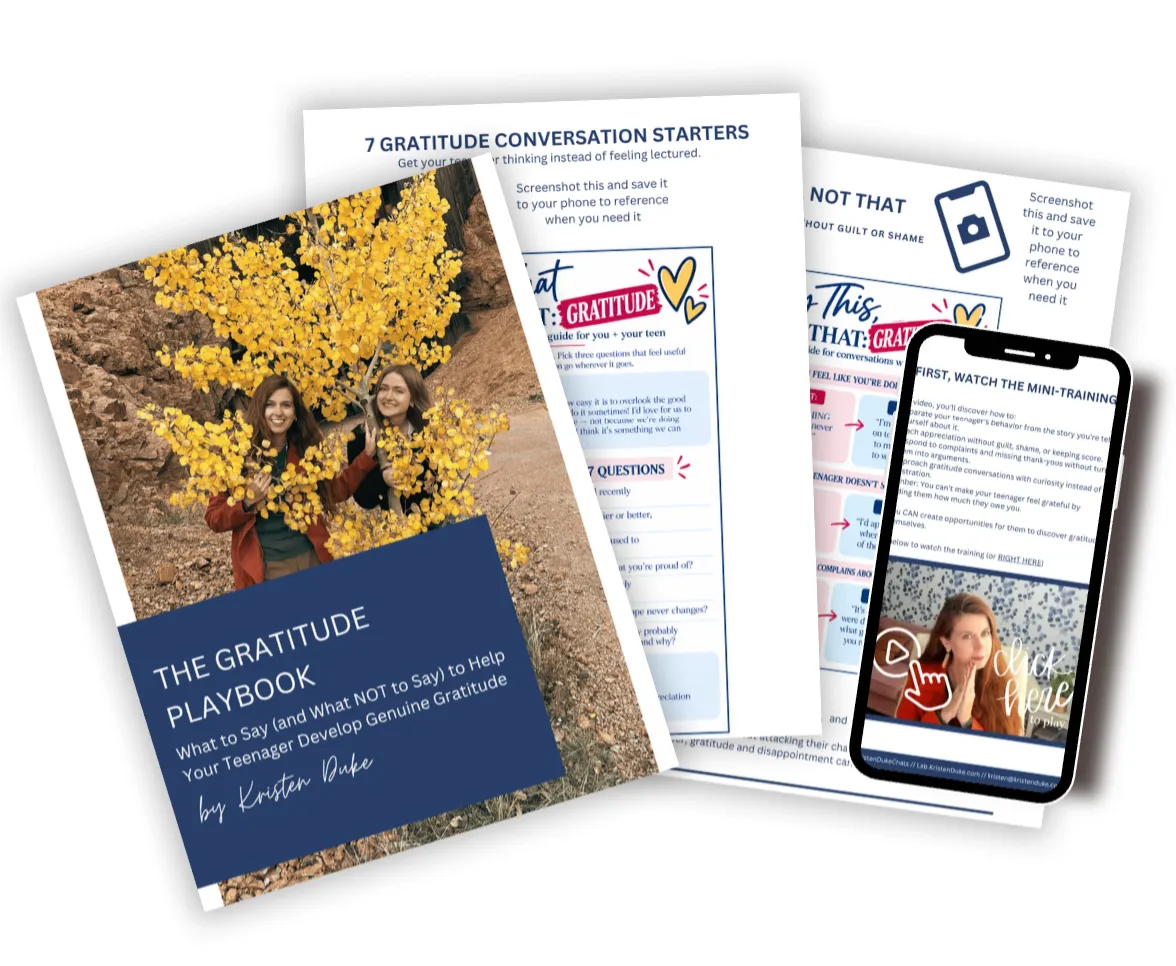
Meet The Gratitude Playbook!
A quick, practical mini-training and conversation guide to help you encourage genuine gratitude in your teenager, without turning every conversation into a lecture.
Because you don't need to become a more convincing lecturer.
You need a different way to help your teenager think about gratitude for themselves.
With The Gratitude Playbook, you'll be able to:
Recognize when your own frustration is getting in the way of the conversation.
Know what to say instead of "Do you have ANY idea how much I do for you?"
Ask questions that encourage your teenager to notice the good in their life.
Respond differently when your teenager complains or seems unappreciative.
*Start planting seeds of genuine gratitude in everyday moments.
Knowing what to say makes teaching gratitude a whole lot easier.
Here's what's waiting for you inside The Gratitude Playbook:
1. A Short Video Strategy Training for Mom
Before you try to change your teenager's attitude, take a few minutes to change your perspective.
This short training helps you rethink gratitude and recognize how your own expectations might be getting in the way.
Use it when: You're feeling unappreciated and need a fresh perspective before talking to your teenager.
2. Ready-to-Use Gratitude Conversation Starters
No more wondering how to bring up gratitude without sounding like you're giving another lecture.
These seven questions help you start meaningful conversations that encourage your teenager to recognize the good in their life.
Use them when: You're driving together, sitting around the dinner table, or having one of those rare moments when your teenager is actually in the mood to talk.
3. Say THIS, Not THAT: Gratitude Edition
Because sometimes it's not WHAT you're trying to teach. It's HOW you're saying it.
Get practical examples of what to say instead of the familiar phrases that can trigger guilt, defensiveness, or eye rolls.
Use it when: You're tempted to say, "Do you have ANY idea how much I do for you?"
You don't need another parenting book to read.
You need a few practical tools you can start using in your next conversation.
©2026 Kristen Duke - All Rights Reserved | Privacy Policy | Terms & Conditions